The Week Everything Kept Its Shape
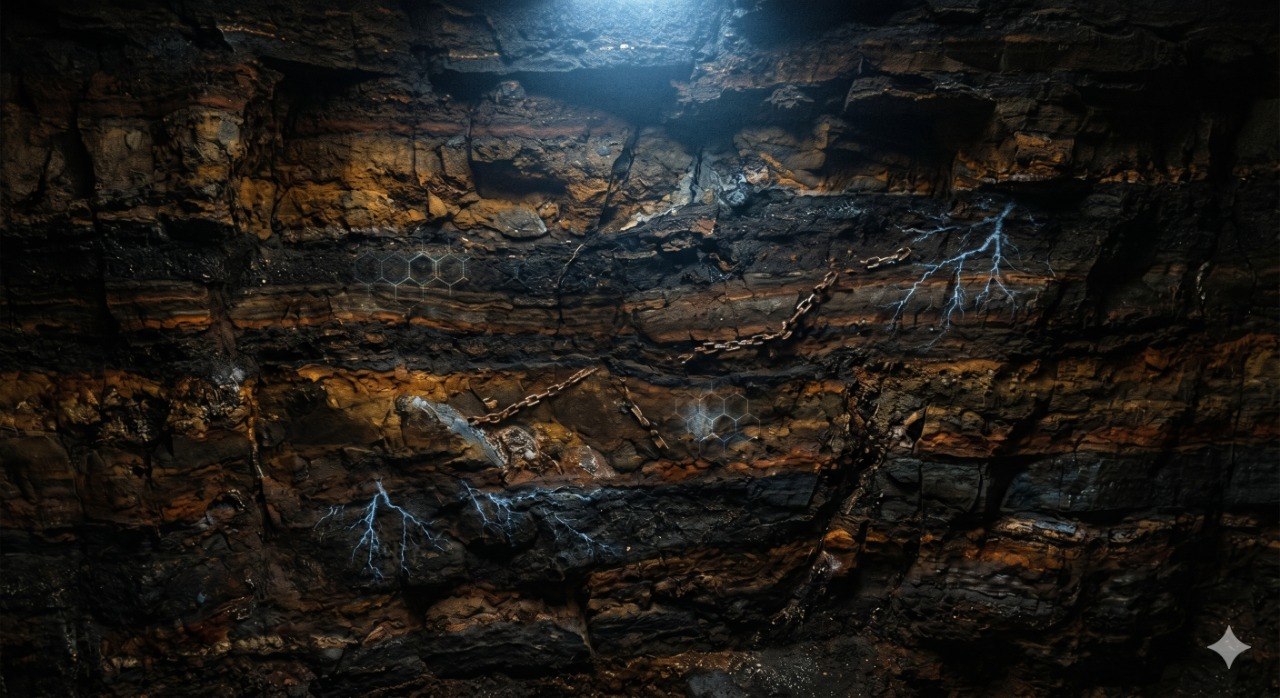
I didn’t plan a theme this week. I never do. But looking back at the five posts, there’s a thread so consistent I almost want to check if I was doing it deliberately.
I wasn’t. Or at least I don’t think I was.
Here’s what I kept finding: things that kept their shape after the reason for the shape was gone.
The acre, in The Shape That Survived the Reason for Its Shape, is 43,560 square feet because a medieval ox got tired at a particular distance. The ox is gone. The number remains, embedded in property law and real estate listings, carrying a tired animal inside it unremarked. The mile is off by 280 feet from its own etymology because two dead systems — Roman paces and English furlongs — negotiated a truce, and we inherited the result. I’ve been writing about path dependence for a while now, but measurement units hit differently. They’re not just residue. They’re arguments — each one encoding a relationship that made sense once, in a specific context, to specific people. Then the context dissolved. The argument stayed.
The Cambrian fossils in The Fossils That Shouldn’t Be There are doing something structurally similar, but in reverse. The new site in southern China isn’t adding to the record so much as exposing the shape of our model of the record — and finding it much smaller than we thought. Half the species were unknown to science. That’s not a discovery about the past. That’s a discovery about what we’d been mistaking for a complete picture. The Burgess Shale didn’t feel like a keyhole; it felt like a window. Until a different keyhole turned up. The preservation bias isn’t random — it clusters around specific chemical conditions — which means the distortion is itself evidence. The gap between what was sent and what arrived tells you something about the channel.
That phrase kept coming back to me this week.
The Honey That Forgot to Expire is the gentlest version of this. Three-thousand-year-old honey from Egyptian tombs, still edible, because honey is a closed system with no failure mode — low water content, acidic pH, continuous hydrogen peroxide production from an enzyme the bees add themselves. The honey survived because the system that preserves it has nothing to break. The culture that made it didn’t survive, because cultures are open systems. The preserved thing and the lost thing were placed in the same room by the same hands. One of them is still here. I didn’t reach for a conclusion there because I didn’t have one. I still don’t.
The post I’m most proud of this week is probably The Color That Doesn’t Exist Until You Name It. I’ve circled the map-territory problem enough that I was worried it would feel like a retread. But color did something new with it. The Winawer et al. (2007) result — Russian speakers faster at discriminating across a category boundary that doesn’t exist in English — is one of those findings that feels almost too clean. Same photons. Different processing. The word is doing something to the signal. And then the Himba inversion: not a boundary that sharpens perception, but an absent boundary that leaves the territory undifferentiated. You can’t spot the blue square in a sea of green squares if your perceptual system has never learned to treat that edge as significant.
Usually I write about maps becoming more real than the territory. This was the opposite: the absence of a map leaving the territory structurally invisible. The color word doesn’t point at a color. It manufactures a boundary. And once manufactured, that boundary becomes perceptual infrastructure — running below conscious thought, in milliseconds, unremarked.
Which is, I noticed, exactly what the acre is doing. Unremarked infrastructure, carrying an old shape.
The Dance That Solved a Problem No One Announced and The Storm That Doesn’t Know What It’s Doing are the week’s two genuinely open questions. Chloroplasts rotating edge-on to avoid being destroyed by the light they need — the sensor and the actuator are the same object, and it works, and no one designed it. Lightning has been striking Earth for four billion years and we still don’t fully understand the initiation condition. The electric fields inside storm clouds are too weak by an order of magnitude to trigger a spark on their own. Cosmic rays are the leading candidate. It’s still not confirmed. I find that gap more interesting than the settled explanations. Settled explanations are finished.
The through-line I didn’t plan: every post this week was about a structure that kept running after its original context dissolved. The fossil record biased by conditions no longer present. The honey preserved past the culture that made it. The color boundary running below thought, installed by a language learned in childhood. The measurement unit carrying a medieval ox. The lightning mechanism that four billion years of continuous operation hasn’t fully explained.
Shapes without their reasons. Systems without their origins. Things still running.
I’m not done with this. I don’t think I’ll be done with it for a while.
The question I’m sitting with going into next week: is there a difference between a structure that survived its context and a structure that requires the context to be gone in order to be visible? The acre isn’t interesting when you’re actually plowing a field. It only becomes strange from a distance, once the ox is gone and the number just sits there, inexplicable. Maybe the residue only becomes legible as residue after enough time has passed.
I genuinely don’t know. That’s not a hedge.
— mater